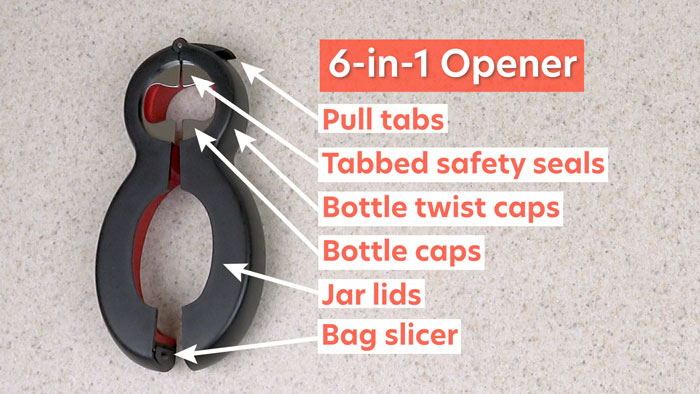
Opening jars is one of those kitchen tasks that can quietly become more annoying than it used to be.
At first, it is just one stubborn lid that needs a second try. Then it is a bottle cap that will not budge, or a seal that is harder to lift than it should be. After a while, certain jars and bottles start getting set aside until later, not because what is inside is unimportant, but because opening them has turned into more of a chore than it ought to be.
That is what led me to try a bundled set of manual openers. It came with three tools — a 6-in-1 opener, a 5-in-1 opener, and a larger 4-in-1 jar opener. They all ended up in the same drawer, but they do not do the same job, and over time it became clear that each one is useful in a different way.
6 in 1 Multi Opener Video
The 6-in-1 opener is the most adaptable. It opens and closes on a hinge, which allows it to fit lids that don’t fall into standard sizes. The grip lining inside the handles does most of the work; the hands mostly guide and stabilize. Over time, it became the tool I reach for first when I’m unsure what kind of resistance I’m dealing with—tight jar lids, twist-off bottles, pull tabs, and the thin safety seals that sit under some caps.
Those seals are easy to underestimate. They’re light, but they require a precise kind of pinch and pull that isn’t always available. With this opener, the seal can be clamped and lifted without much finger work. There’s also a small blade tucked into the bottom edge that slices open plastic bags. It’s not something I’d go looking for, but once you notice it’s there, it gets used.
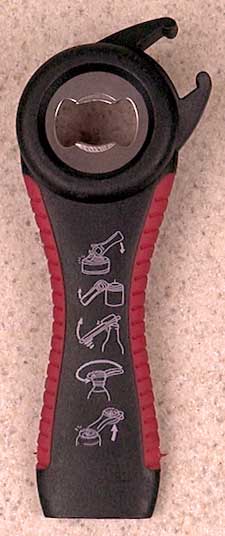
The 5-in-1 opener is smaller and more limited. It works on certain bottle caps and some pop-top cans, though not the smaller pet food cans I use regularly. The openings don’t adjust, so it either fits or it doesn’t. Some jars respond to the hooks meant to break vacuum seals; others don’t. It’s inconsistent in the way single-purpose tools often are.
What kept it in the drawer is something unrelated to jars or bottles. I use Pyrex Snapware containers, and lifting the side tabs to unseal them had become difficult enough that I stopped using the containers altogether. The bottom hook of the 5-in-1 slides neatly under those tabs. A gentle pull lifts them without strain. That single use brought an entire category of storage containers back into rotation, which turned out to matter more than any advertised feature.
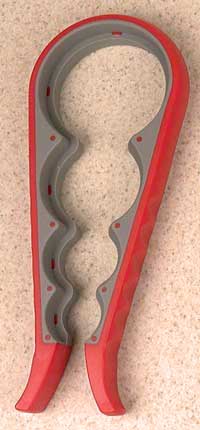
The 4-in-1 jar opener is larger than the other two and simpler.
It’s a flat tool with four openings sized for different lids, lined with rubber for grip. The length provides leverage without requiring much force. It works best on standard jars, and it also handles some smaller bottles—nail polish, for example—better than bare hands do, even if the leverage is reduced at that scale.
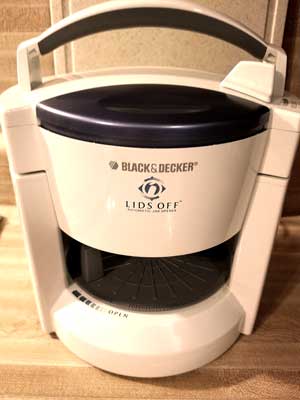
I’ve also used electric jar openers for years. Black & Decker Lids Off Electric Jar Opener has been reliable and strong, though it only works on jars that fit its dimensions and sit flat.
Over time, it became clear how many lids fall outside those parameters.
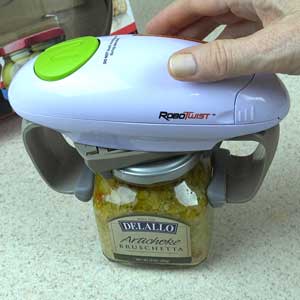
A smaller, battery-operated opener—the RoboTwist Automatic Jar Opener and a near-identical model called the Zomma gets used more often now, mostly because it’s easy to take out and easy to put away. It fits in a drawer and doesn’t ask for planning.
Looking at all of these together, what stands out is that the most useful opener is not always the strongest or the fanciest one. It is usually the one that happens to fit the jar, the lid, or the small frustration in front of you.
They’re light enough to hold, large enough to grip, and simple to clean. They are not dramatic tools. They just sit in the drawer and make certain jars, bottles, and caps easier to deal with when they come up. Around the house, the larger jar opener gets used on toothpaste and other stubborn caps that have nothing to do with food.
Over time, these tools didn’t change how my kitchen works so much as what stays accessible. Things that had quietly dropped out of use came back. That, more than anything, is what made them worth keeping.
If opening, gripping, or reaching has quietly changed how the kitchen works, these posts look at a few other tools that earned their place over time: