

I’m not sure how I lived this long without a robot vacuum. Growing up, a carpet sweeper was a welcome relief from dragging rugs outside and beating them with a rug beater. Later, vacuums took over, sucking grime deeper out of rugs.
Now, I’ve joined the robotic vacuum revolution. Partly it slipped by me because my husband does most of the vacuuming — arthritis makes it hard for me. But after watching him wrestle with our old upright, I knew it was time for something lighter.
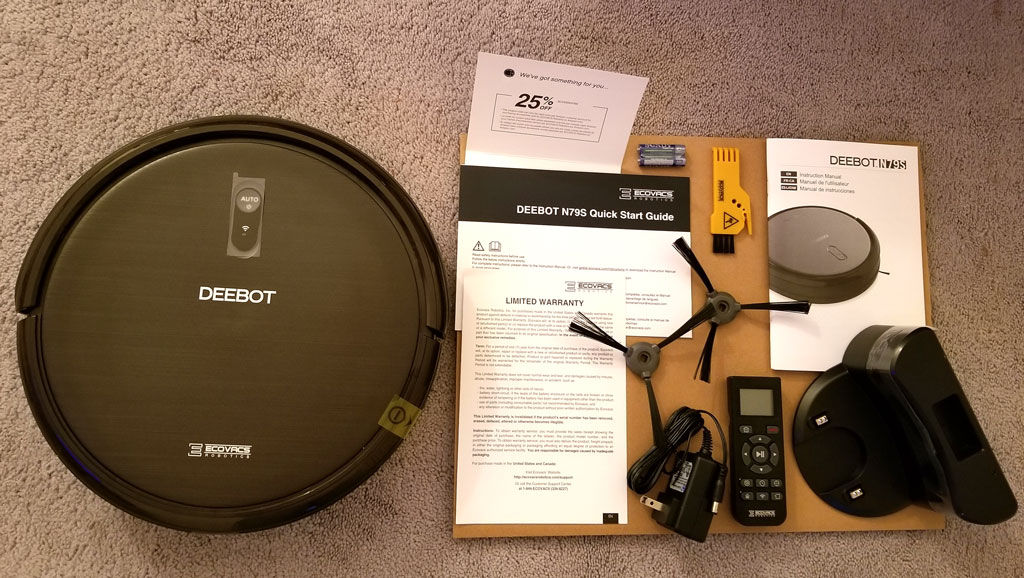
We settled on the Ecovacs Deebot N79S, a good balance of features and affordability. It has Wi-Fi control for tech-savvy users, but we stick with the simple remote. Out of the box, it was easy to get going after a four-hour charge.
How it fits in daily life
Our floors are mostly hardwood with a few thin rugs, so the Deebot handles them perfectly. My daughter, who also has the same model, says it even manages surface dirt on thicker carpet, though a traditional vacuum still picks up a little more. Between the Deebot and her stick vacuum, she rarely pulls out the upright anymore — pets, spilled litter, and dog hair are no problem.
It’s surprisingly quiet. A push of a button, and off it goes, happily cleaning floors while we go about our day.
Setup and basic use
Setup was straightforward. Hubby followed the Quick Start Guide: attach the spinning brushes, flip it on, and place it on the charger. After four hours, it was ready to roll. We inserted the remote batteries while it charged.
Cleaning is simple. Press Auto on the remote (or the unit itself), and it sweeps in straight lines, turning when it hits obstacles, until the battery is low — then it returns to the charger. Most days we leave it in Auto Mode. Spot or Edge modes exist, but we rarely use them.
What makes it helpful
- Under beds: With just three inches of clearance, it reaches places the upright never did.
-
Edges and corners: Long side brushes scoop dust where walls meet floors.
-
Low-maintenance: The dust bin empties quickly, and filters rinse easily. Quick brush-up of the front sensors keeps navigation smooth.
- Even holidays feel easier. Spreading small cleaning tasks across days keeps floors presentable without extra effort.
Living with a self-operating vacuum
A few practical things to know before you start: clear loose wires or clutter so it doesn’t get tangled, and keep the front sensor area clean so it navigates properly. Very low furniture needs a bit of clearance, and if it gets wedged, lifting it is easy — it weighs about 7–8 pounds. The included multi-function cleaning tool is handy for snipping hair from the main brush. Beyond that, basic maintenance keeps it running well without fuss.
Why we love it
This little robot handles the grunt work quietly, reliably, and without much attention. It doesn’t replace vacuuming entirely, but it makes floors manageable, day-to-day. For us, that’s enough. And yes — it’s a lot easier on arthritis than hauling out the old upright.
Alternatives to consider
Our Deebot N79S has since been replaced by newer models; here are some other vacuum-focused robots with good reviews:
-
Eufy 11S MAX – Slim, quiet, strong suction for everyday floors.
-
Eufy RoboVac G30 – Easy to use, great along edges, keeps dust and hair under control.
-
iRobot Roomba 692 – App-connected, dependable on hard floors and low-pile carpet.
-
iRobot Roomba 105 – Simple, low-fuss vacuuming.
-
Tp-Link Tapo RV20 Max – Smart mapping, solid suction, good value for daily cleaning.
All of these can run vacuum-only, so you can leave any mop feature off and still keep floors tidy with minimal effort.
Video: Just for fun, Kitty Cat and Deebot